

Nov 22, 2026 · 5 min read
Phuket Property Lawyer: Best Way to Hire and Check One
Phuket property lawyer guide: what they check before you buy, typical fees, how to verify a Thai licence online and...

To retire in Phuket, most foreigners aged 50 or over use a one-year retirement extension of stay, show either 800,000 baht in a Thai bank or a monthly income of 65,000 baht, and then rent or buy a condo, since foreigners cannot own land in their own name. The island offers international hospitals, an established expat community and direct flights, but the visa paperwork and property rules need planning. This guide explains the main steps, the housing options and the mistakes to avoid.
What people call the "retirement visa" is usually a Non-Immigrant O visa followed by a one-year extension of stay granted by immigration in Thailand and renewed each year. A second route, the Non-Immigrant O-A long-stay visa, is applied for from abroad and comes with stricter health insurance rules. Both require you to be at least 50 years old.
| Route | Money test | Health insurance |
|---|---|---|
| Non-O plus yearly retirement extension | 800,000 baht in a Thai bank, 65,000 baht a month income, or a combination | Not required under the national rule for the yearly extension |
| Non-Immigrant O-A (long stay) | 800,000 baht balance or 65,000 baht a month income | At least USD 100,000 or 3,000,000 baht of cover |
On the bank deposit route, the money generally has to be in a Thai account for two months before you apply and stay there for three months afterwards, and the balance should not fall below 400,000 baht for the rest of the year. Rules and documents can change, so always check the official Thai e-Visa portal and Phuket Immigration before you apply. Wealthier retirees can also look at the Thailand LTR visa, which has its own income and insurance criteria.
Retirement permission does not allow you to work, paid or unpaid. You must also report your address to immigration every 90 days while you stay continuously in Thailand.
Most advisers suggest renting for at least six to twelve months first. Phuket's neighbourhoods feel very different in high season and monsoon season, traffic patterns matter when you visit doctors regularly, and some areas are much quieter than they look on a holiday visit. Renting also keeps your capital flexible while your visa routine settles down.
Under Thailand's Condominium Act, foreigners can own condo units freehold as long as total foreign ownership in the building stays within 49% of the saleable area. The purchase money must be transferred into Thailand in foreign currency, and the bank issues a Foreign Exchange Transaction form as proof. Read our guides to the Phuket condo foreign quota and the FET form in Thailand before you send any money.
For a house, the usual structure is a land lease of up to 30 years registered at the Land Office, with the building itself possibly owned separately. Some couples also use a usufruct over land owned by a Thai spouse. Avoid nominee arrangements, which are illegal and risky. Our comparison of freehold vs leasehold in Phuket explains the trade-offs, and an independent Phuket property lawyer should check any contract.
Many people who retire in Phuket choose an area based on healthcare access, supermarkets and how hilly the roads are, rather than on the beach alone.
Our guide to the best areas to live in Phuket compares more neighbourhoods in detail.
Phuket has private international hospitals, including Bangkok Hospital Phuket and Mission Hospital Phuket, as well as the large government Vachira Phuket Hospital in Phuket Town. Private care is generally of good quality but costs rise with age, so many retirees buy health insurance well before their late sixties, when cover becomes harder or more expensive to get. Our hospitals in Phuket guide lists the main options.
Yes. 50 is the minimum age for the retirement extension and the O-A visa, provided you meet the financial requirements. You cannot work on either.
You cannot own land as a foreigner, but you can own a condo unit freehold within the foreign quota, or lease land for up to 30 years and build or buy a house on it.
No. Owning a condo in Thailand does not by itself give you the right to stay. You still need a suitable visa or extension.
It is required for the O-A visa, with cover of at least USD 100,000 or 3,000,000 baht, but not under the national rule for the yearly Non-O retirement extension. Most retirees still buy cover.
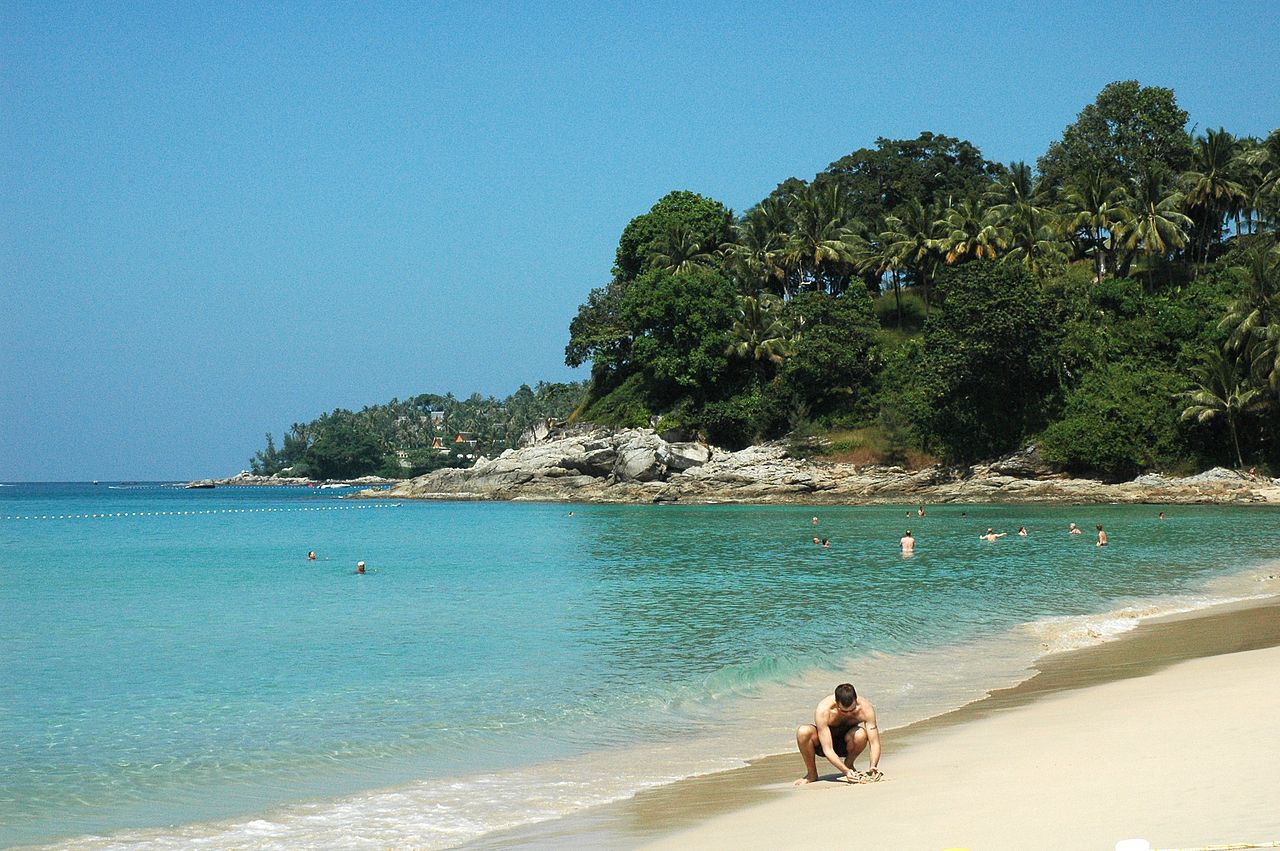
Image: Nai Harn Beach, Phuket, via Wikimedia Commons (public domain).
Phuket property lawyer guide: what they check before you buy, typical fees, how to verify a Thai licence online and...

Phuket branded residences hit a record 1,102 completions in 2026. See where they are built, foreign ownership rules...

Superficies in Thailand explained: how foreigners own a Phuket villa on leased or spouse land, 30 year terms, inher...

Thalang property guide: areas from Bang Tao to Mai Khao, villa and condo asking prices, rental yields, foreign owne...
Surin property guide: prices in Choeng Thale, foreign ownership rules, beach clearance, erosion and rental checks b...

Condo inspection Phuket guide: when to snag a new or resale unit, a checklist for leaks, tiles, windows and power,...