

Northern Thailand Bears the Brunt
PM2.5 Levels Exceed Safety Thresholds
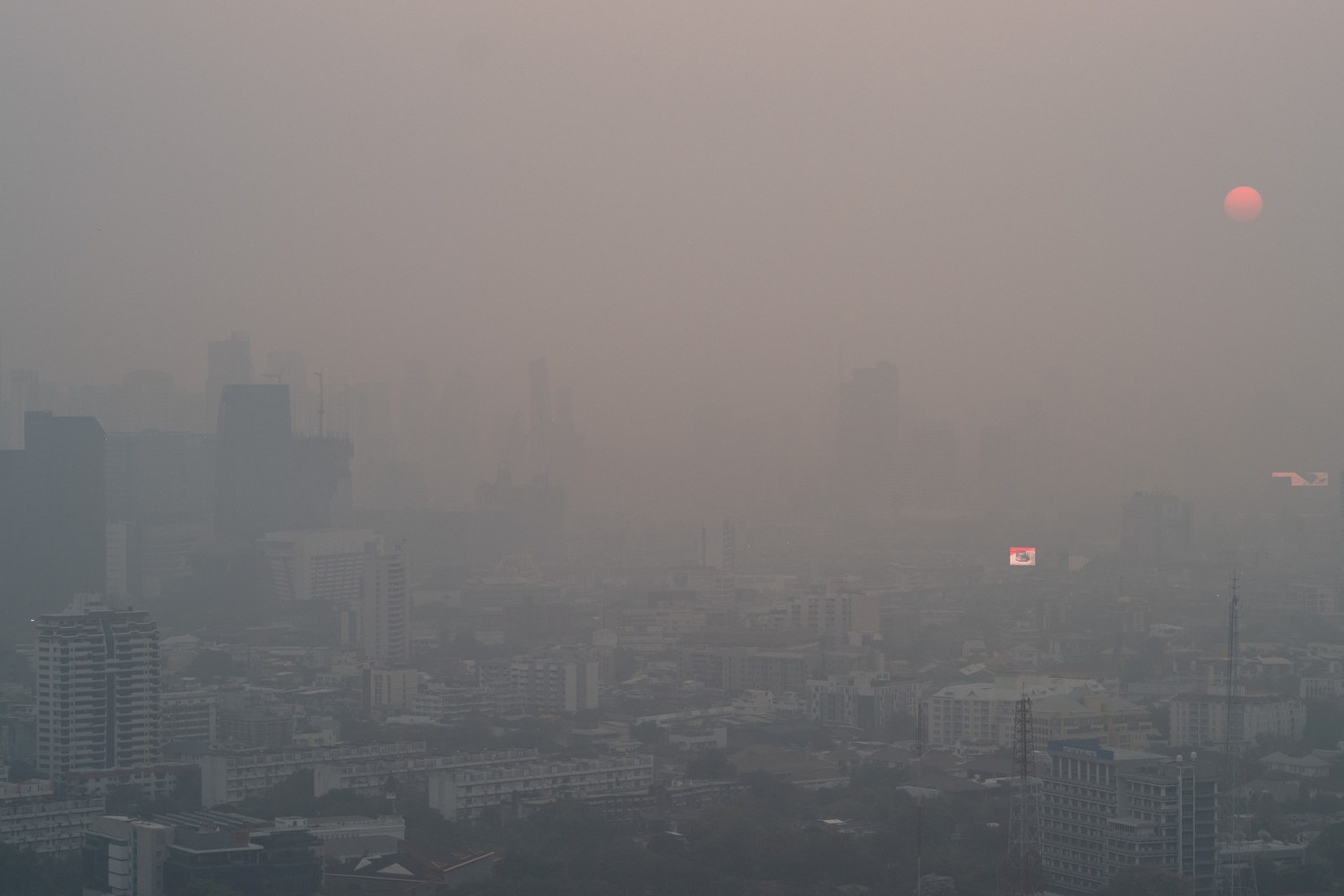
The Geo-Informatics and Space Technology Development Agency (Gistda) reported that these eight provinces were blanketed with orange levels of particulate matter 2.5 micrometers and less in diameter (PM2.5), ranging from 38.3 to 48.6 micrograms per cubic meter of air. These levels surpass the government-set safe threshold of 37.5μg/m3, indicating potential health risks for residents.
Affected Provinces Identified
Geographic Distribution of Pollution
The provinces experiencing unsafe air quality, listed in descending order of PM2.5 levels, are Lamphun, Samut Songkhram, Phrae, Lampang, Chiang Mai, Phayao, Nan, and Mae Hong Son. Notably, Samut Songkhram is the only affected province located in the Central Plain, while the remaining seven are situated in the North.
Positive Air Quality Reports
Regions with Favorable Conditions
In contrast to the affected areas, twelve provinces reported very good air quality, with PM2.5 levels ranging from 8.8 to 15μg/m3. These provinces, primarily located in the Northeast and South, include Bueng Kan, Nakhon Phanom, Phuket, Sa Kaeo, Satun, and Ubon Ratchathani. Bueng Kan boasted the lowest PM2.5 level at 8.8μg/m3.
Nationwide Air Quality Overview
Majority of Provinces Show Good Air Quality
Thirty-four provinces, including Chon Buri, Greater Bangkok, Krabi, Loei, Nakhon Pathom, Nakhon Ratchasima, and Rayong, reported good air quality with PM2.5 levels between 15 and 24.8μg/m3. This data suggests that the majority of Thailand is experiencing favorable air conditions despite the localized pollution issues.
Monitoring and Visualization
Gistda’s Air Quality Mapping
The Gistda map released on Sunday morning depicted low and moderate levels of PM2.5 using blue, green, and yellow indicators1. This visual representation helps authorities and residents quickly assess air quality conditions across the country.
