

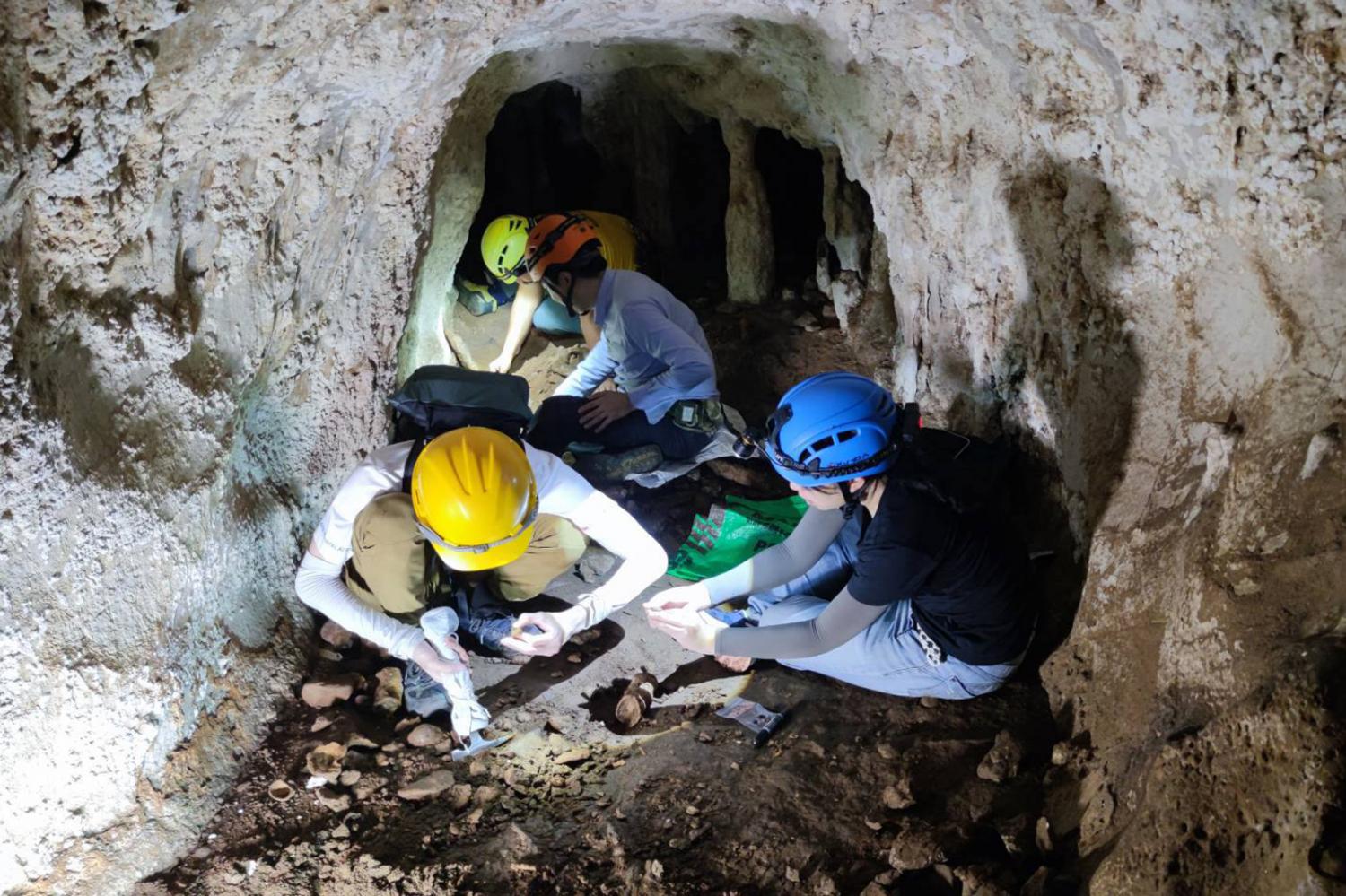
Researchers in Krabi have made a groundbreaking discovery, uncovering ancient fossils into Chong cave that reveal a fascinating glimpse into the region’s past. ## Discovery Overview and ### Fossil Significance highlight the importance of this find. The team, led by Assoc Prof Kantapon Suraprasit from Chulalongkorn University and local expert Niwat Wattanayamanaporn, unearthed fossils of spotted hyenas, orangutans, deers, wild boars, cows, and hedgehogs. These fossils are estimated to date back between 200,000 to 80,000 years ago from the Late Pleistocene epoch.
The discovery marks a significant milestone as it includes the southernmost record of spotted hyena fossils in Southeast Asia. ## Environmental Insights and ### Savannah Evidence show how these findings shed light on Krabi’s past environment. Stable isotope analysis suggests that around 200,000 years ago, Krabi was characterized by a savannah with patches of dense forest—a stark contrast to its current lush tropical landscape. This environment would have facilitated the migration of various mammals across different islands during that era.
The presence of such diverse species indicates that Krabi was once a thriving ecosystem capable of supporting life forms now found only in distant regions like Africa. ## Ecological Implications and ### Evolutionary Perspectives underscore how these discoveries contribute to our understanding of Earth’s dynamic past. The research not only enriches our knowledge but also serves as a reminder of nature’s transient beauty and complexity. As scientists continue to explore these ancient relics within To Chong cave, they are piecing together an epic narrative about life on Earth over millennia.
This expedition highlights the importance of studying past environments for insights into current environmental changes and human adaptation strategies. ## Research Impact and ### Future Studies emphasize how ongoing research will further illuminate our understanding of evolutionary processes. By analyzing fossil remains from neighboring caves using advanced techniques like stable isotope analysis on carbon and oxygen levels in fossilized enamel, researchers can reconstruct historical ecosystems with greater precision.
In conclusion, this remarkable find offers an extraordinary window into Southeast Asia’s prehistoric landscape during the Pleistocene era. It underscores how scientific exploration can unveil hidden chapters in Earth’s history while inspiring new questions about life across vast expanses over time.
