

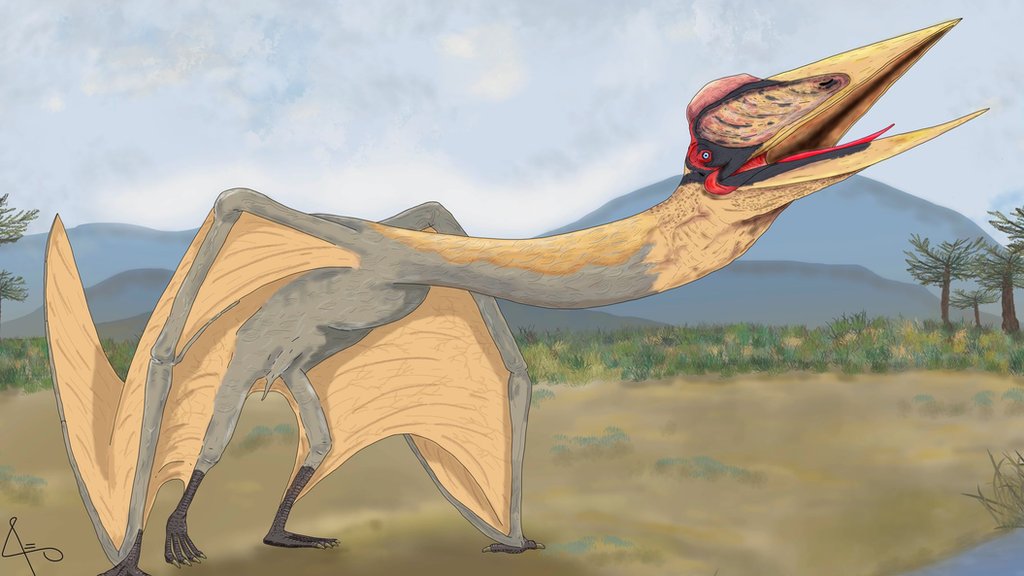
Garudapterus Named After Mythical Bird
Thai paleontologists have uncovered a new pterosaur species, named Garudapterus buffetauti, marking Thailand’s first documented prehistoric flying reptile fossil, announced on June 20, 2025. Found at the Phra Prong site in Watthana Nakhon, Sa Kaeo province, this 130-million-year-old fossil, revealed on June 22, 2025, sheds light on Southeast Asia’s ancient ecosystems, captivating global researchers.
Fossil Details Revealed
Skull and Jawbone Uncovered
The fossil, discovered in Early Cretaceous strata, includes a partial skull and jawbone with distinctive, fish-catching teeth, characteristic of the Gnathosaurinae short-tailed pterosaur group. With a 2.5-meter wingspan and a spoon-shaped snout, Garudapterus likely soared over ancient waterways, as described by Dr. Sita Manitkoon, lead paleontologist at Mahasarakham University’s Research and Education Centre for Palaeontology.
Honoring Mythology and Science
Tribute to Garuda and Buffetaut
The name Garudapterus draws from “Garuda,” a mythical bird-like creature in Thai and Hindu lore, reflecting the pterosaur’s majestic form, while “buffetauti” honors Dr. Eric Buffetaut, a French paleontologist with over 40 years of contributions to Thai fossil research. This dual homage underscores the cultural and scientific significance of the find, celebrated in academic circles.
Collaborative Research Triumph
Global Team Publishes Findings
The discovery, published in the journal Cretaceous Research in March 2025, resulted from a collaboration between Mahasarakham University, Thailand’s Department of Mineral Resources, Brazil’s University of São Paulo, and China’s Shihezi University. This international effort confirms Garudapterus as Southeast Asia’s first verified pterosaur species, expanding the region’s paleontological record beyond dinosaur finds.
Rarity of Pterosaur Fossils
Thailand’s Fossil Legacy Grows
Thailand has identified 13 dinosaur species, primarily in the northeast, but pterosaur remains are exceptionally rare, with only scattered teeth and fragments previously reported. The Sa Kaeo find, a significant departure from northeastern discoveries, highlights the eastern region’s untapped fossil potential, encouraging further exploration into Thailand’s prehistoric past.
Implications for Paleontology
Southeast Asia’s Ancient Skies Revealed
The Garudapterus discovery offers insights into the Early Cretaceous period, suggesting a rich ecosystem where pterosaurs thrived alongside dinosaurs. Its fish-eating adaptations point to ancient aquatic environments in what is now Sa Kaeo. Paleontologists anticipate more regional finds, with Thailand emerging as a key hub for studying Mesozoic life, drawing global attention.
Future Research Opportunities
Expanding Thailand’s Fossil Map
This landmark find underscores the need for continued paleontological research across Thailand, beyond the well-explored northeast. Dr. Manitkoon’s team plans to excavate further in Sa Kaeo, hoping to uncover additional pterosaur or dinosaur fossils. The discovery, already sparking discussions in scientific communities, positions Thailand as a vital contributor to understanding Earth’s ancient biodiversity.
