

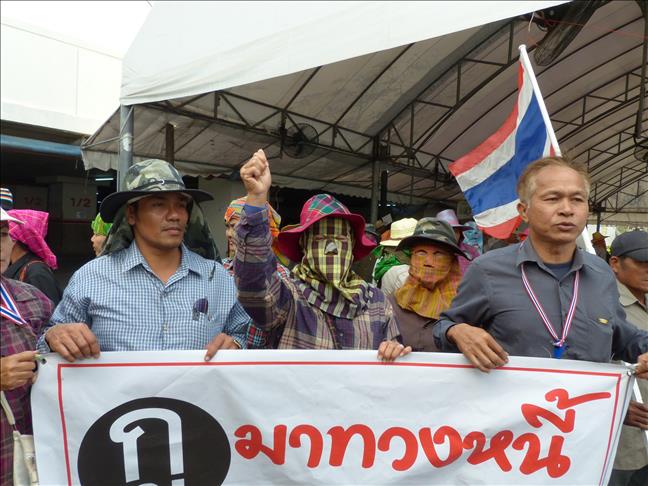
Farmers Protest in Bangkok Over Low Rice Prices
Gathering at Government House
On February 19, 2025, farmers from various provinces, including Sukhothai, Phitsanulok, and Suphan Buri, gathered at Government House in Bangkok to demand an increase in rice prices. They are urging the government to raise prices from the current rate of 6,000 baht to 10,000 baht per tonne. The protest reflects the farmers’ desperation as they face significant financial losses due to plummeting prices.
Economic Impact of Falling Prices
The ongoing protests come as farmers begin harvesting their off-season rice. Current market prices have dropped to between 6,000 and 7,000 baht per tonne, compared to last year’s prices of 10,000 to 11,000 baht. This decline has led to severe economic strain on farmers who are struggling to cover production costs. Commerce Minister Pichai Naripthaphan attributed the price drop primarily to external factors such as India’s resumption of rice exports and reduced demand from Indonesia and the Philippines.
Government Response and Future Actions
Urgent Measures Under Consideration
In response to the protests, the Thai government is exploring measures to support the domestic rice market. Minister Pichai Naripthaphan announced that a panel on rice policy and management would convene to discuss potential interventions. This includes negotiating with China for additional rice purchases and establishing rice-buying points through provincial offices.
Direct Support for Farmers
Pramote Charoensilp, president of the Thai Agriculturists Association, has called for direct compensation measures for farmers. His proposal includes payments of 500 baht per rai for those adhering to environmental regulations and additional support for those affected by low prices. This approach aims to reduce reliance on middlemen and mitigate corruption risks.
The Broader Context of Rice Farming in Thailand
Challenges Facing Thai Rice Farmers
The current situation highlights the ongoing struggles faced by Thai rice farmers amid fluctuating global markets. The dual growing seasons— in-season and off-season—are crucial for farmers’ livelihoods. However, this year’s harvest is overshadowed by economic challenges that threaten their sustainability.
The Importance of Policy Intervention
As farmers continue their protests, they emphasize the need for immediate government action to stabilize rice prices. The upcoming meetings of the national subcommittee on rice policy and management will be pivotal in determining future support for these agricultural workers. The outcome will significantly impact not only the farmers but also Thailand’s broader agricultural economy.
In conclusion, the protests reflect a critical moment for Thai farmers who are advocating for fair compensation and sustainable practices in the face of economic adversity.
