

Nov 7, 2026 · 4 min read
Thailand OECD Membership Push Paired With FastPass Plan
Thailand OECD membership could come faster than five years, PM Anutin says, as Thailand FastPass offers investors o...
Thailand rail links with Laos and China advance via double-track, high-speed plans, and a Mekong bridge to cut freight costs.
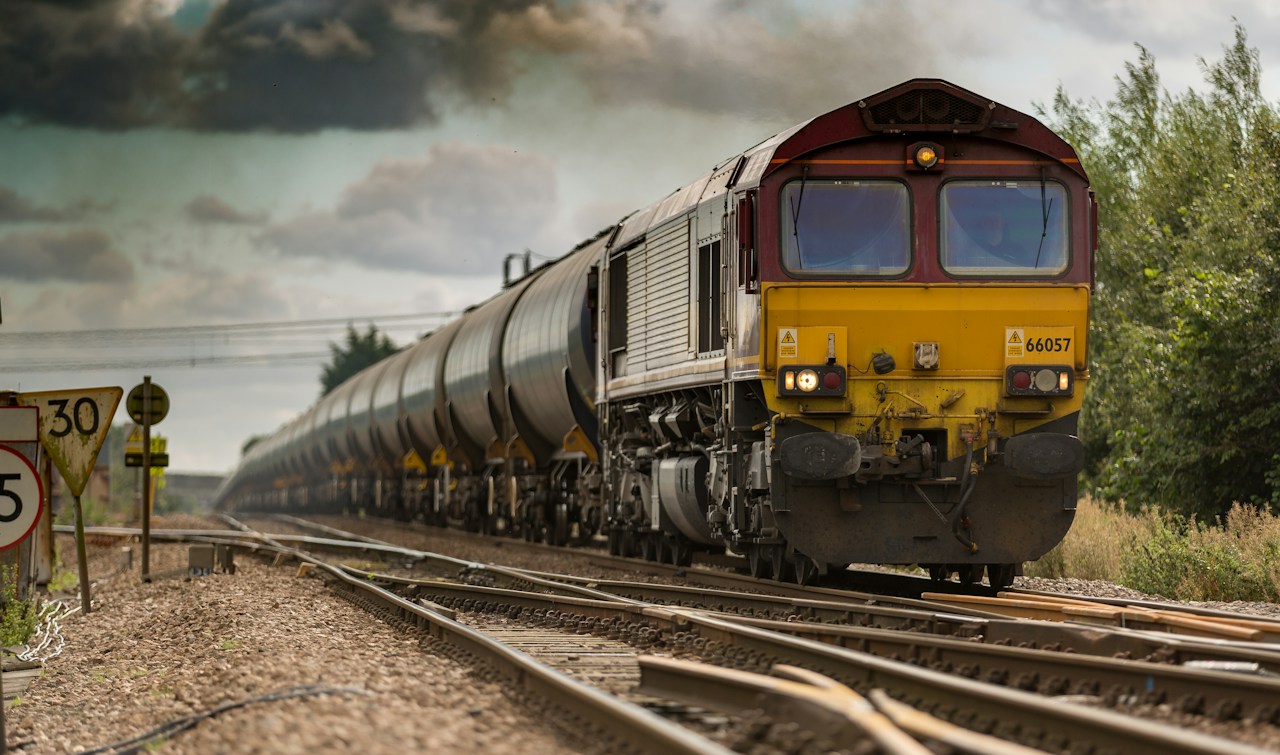
Thailand rail links with Laos and China are being accelerated to cut transport costs and deepen regional logistics, according to reporting by The Star dated 7 November 2026. Double-track and high-speed projects, a new Mekong railway bridge, and a freight transfer centre in Nong Khai sit at the centre of the plan as Bangkok positions the northeast as a gateway for trade with neighbours and beyond.
Deputy Prime Minister and Transport Minister Phiphat Ratchakitprakarn has described Nong Khai as a gateway that can connect Laem Chabang and Map Ta Phut through northeastern Thailand to Laos and China. The strategy aims to shorten freight times and support growing cross-border commerce.
The Department of Foreign Trade reported total trade of 1.76 trillion baht in the first nine months of 2026, up 18.8 percent year on year. Exports reached 978.11 billion baht (+16.6 percent) and imports 786.21 billion baht (+21.6 percent), leaving a surplus of 191.90 billion baht.
September border trade with four neighbours hit 80.74 billion baht (+24.4 percent). Malaysia accounted for 39.97 billion baht (+49.6 percent) and Laos 24.54 billion baht (+1 percent). Transit trade with China stood at 59.37 billion baht, the highest among third countries in that reporting, as summarised by The Star.
Those flows sit alongside broader growth debates covered in our pieces on the Thailand GDP forecast and JSCCIB Thailand growth outlook.
The Khon Kaen–Nong Khai double-track line spans 167 kilometres and is targeted for operations in 2028. Thai-Chinese high-speed rail phase 2, from Nakhon Ratchasima to Nong Khai over 357.12 kilometres, has Cabinet approval in principle with a target of 2033.
A proposed 735-metre Mekong four-track bridge would carry both metre and standard gauge. The State Railway of Thailand has finished the detailed design, and an environmental impact assessment has been submitted. Officials also plan a freight transfer centre in Nong Khai to smooth gauge and cargo handovers.
Faster inland connections to China via Laos can lower costs for Thai exporters who now lean heavily on road hauls. The Laos-China Railway, open since 2021, has already moved large passenger and freight volumes, giving Thai planners a proven corridor to plug into once domestic double-track and bridge works advance.
For Phuket and southern operators, the national story still matters: lower national logistics costs and stronger ASEAN-China corridors can reshape pricing and inventory strategies across Thailand. Policy context also intersects with longer-term economic alignment themes such as Thailand OECD membership fastpass coverage.
Officials present the package — double-track by 2028, high-speed phase 2 toward 2033, the Mekong bridge, and the Nong Khai transfer hub — as a single logistics push rather than isolated lines. If delivery stays on schedule, rail times from Thai deep-sea ports toward Kunming could become a competitive alternative to slower road routes.
Businesses watching freight capacity should track TEU volumes on the Nong Khai corridor and Cabinet timelines for the high-speed segment. The Star's ASEAN Plus report frames the investment as a direct response to rising border and transit trade with Laos, Malaysia, and China.
Port operators and inland container depots will watch wagon and TEU figures closely as double-track sections open. Even before high-speed passenger services arrive, freight reliability on the Nong Khai corridor could reshape how Thai exporters schedule inventory bound for southern China and beyond.
Photo: Unsplash (free license). Image used for Thailand rail links logistics context.
Thailand OECD membership could come faster than five years, PM Anutin says, as Thailand FastPass offers investors o...
Thailand AI supply chain status, cited by the finance minister with World Bank and IMF notes, is drawing investment...

Thailand inflation hits 3.9 percent in October as oil and flood-linked food costs push prices above the Bank of Tha...
Thailand GDP forecast rises to 2.4% at the Bank of Thailand as AI-linked exports surge; a wider manufacturing index...

Thailand pickup truck trade-in support is under review, with B20-ready replacements eyed and local-content tax hike...

Thailand fuel price cuts from Nov 6: petrol to 49.33 baht, B7 diesel to 41.79, gasohol down 1 baht; B20 retail unch...