

Discovering Cultural Diversity in the Mountains
A Journey Through Thailand’s Ethnic Enclaves
In the mountainous regions of northern Thailand, a diverse tapestry of ethnic groups known as hill tribes has made their home. These communities, officially recognized by the Thai government, include the Akha, Hmong, Htin, Iu-Mien, Karen, Khamu, Lahu, Lisu, and Lua. Over time, other groups such as the Kachin, Dara’ang, Mlabri, and Shan have also been acknowledged under the broader term “Ethnic Hill tribes”.
The Largest Hill Tribe: The Karen People
Exploring Karen Culture and Traditions
The Karen, the most populous hill tribe in Thailand, have established communities throughout the northern regions and even as far south as the mountains near Bangkok. Divided into four main subgroups – ‘White’, ‘Red’, ‘Pa-o’, and ‘Kayah’ – each possesses its own unique language, culture, and customs. In recent years, Karen communities have been at the forefront of developing sustainable farming practices, moving away from traditional slash-and-burn agriculture. These welcoming communities often invite visitors to experience their way of life, offering opportunities to share meals, stories, and learn about mountain living.
A Mosaic of Cultures: The Seven Main Hill Tribes
Unveiling the Unique Identities of Thailand’s Mountain Peoples
The hill tribes of northern Thailand comprise seven primary groups: the Akha, Lahu, Karen, Hmong/Miao, Mien/Yao, Lisu, and Palaung. While these communities share some festivals, each tribe boasts its own distinct culture and language. Traditionally subsistence farmers, these groups have adapted to life in the mountainous terrain. Trekking through northern Thailand offers a unique opportunity to encounter these diverse communities and gain insight into their rich cultural heritage.
Preserving Traditions in a Changing World
The Challenges and Opportunities Facing Hill Tribe Communities
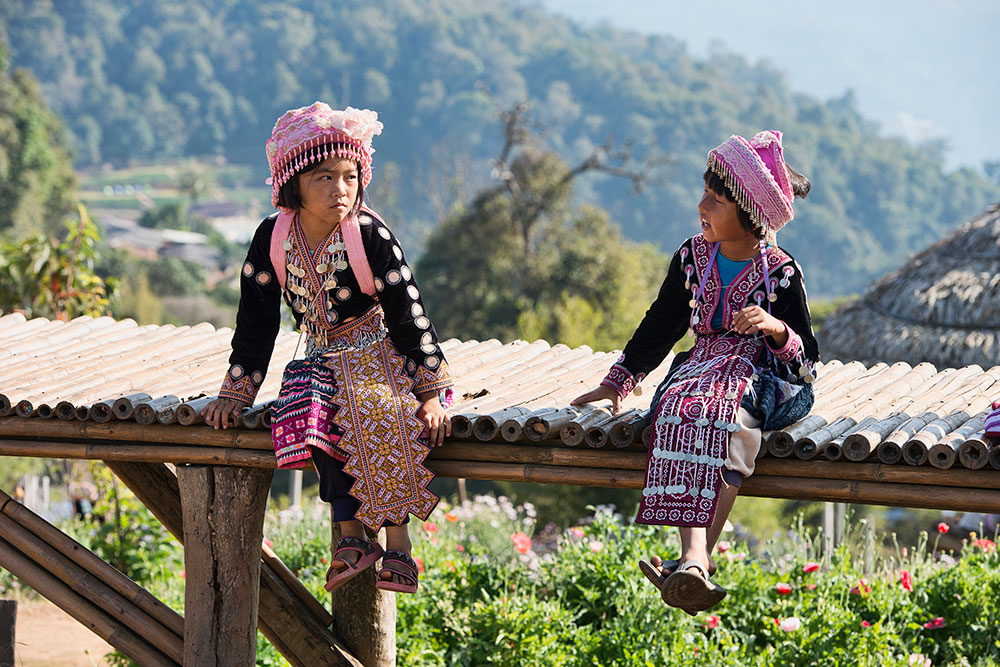
Each hill tribe in northern Thailand maintains its own set of customs, language, attire, and spiritual beliefs. Even within individual tribes, significant variations exist. For example, the Black Hmong and White Hmong are easily distinguished by their different attire and distinct dialects. The origins of these tribes are often shrouded in mystery, with numerous myths and legends contributing to their rich cultural narratives. As these communities navigate the modern world, they face the challenge of preserving their unique identities while adapting to changing circumstances.
Ethical Tourism and Cultural Exchange
Responsible Ways to Experience Hill Tribe Culture
For travelers interested in experiencing hill tribe culture, it’s crucial to approach these communities with respect and cultural sensitivity. Many Karen villages, for instance, welcome visitors and offer opportunities for cultural exchange. Spending time in these communities, sharing meals, and learning about their traditions can provide invaluable insights into their way of life. However, it’s important to engage in responsible tourism practices that support and empower these communities rather than exploit them.
