

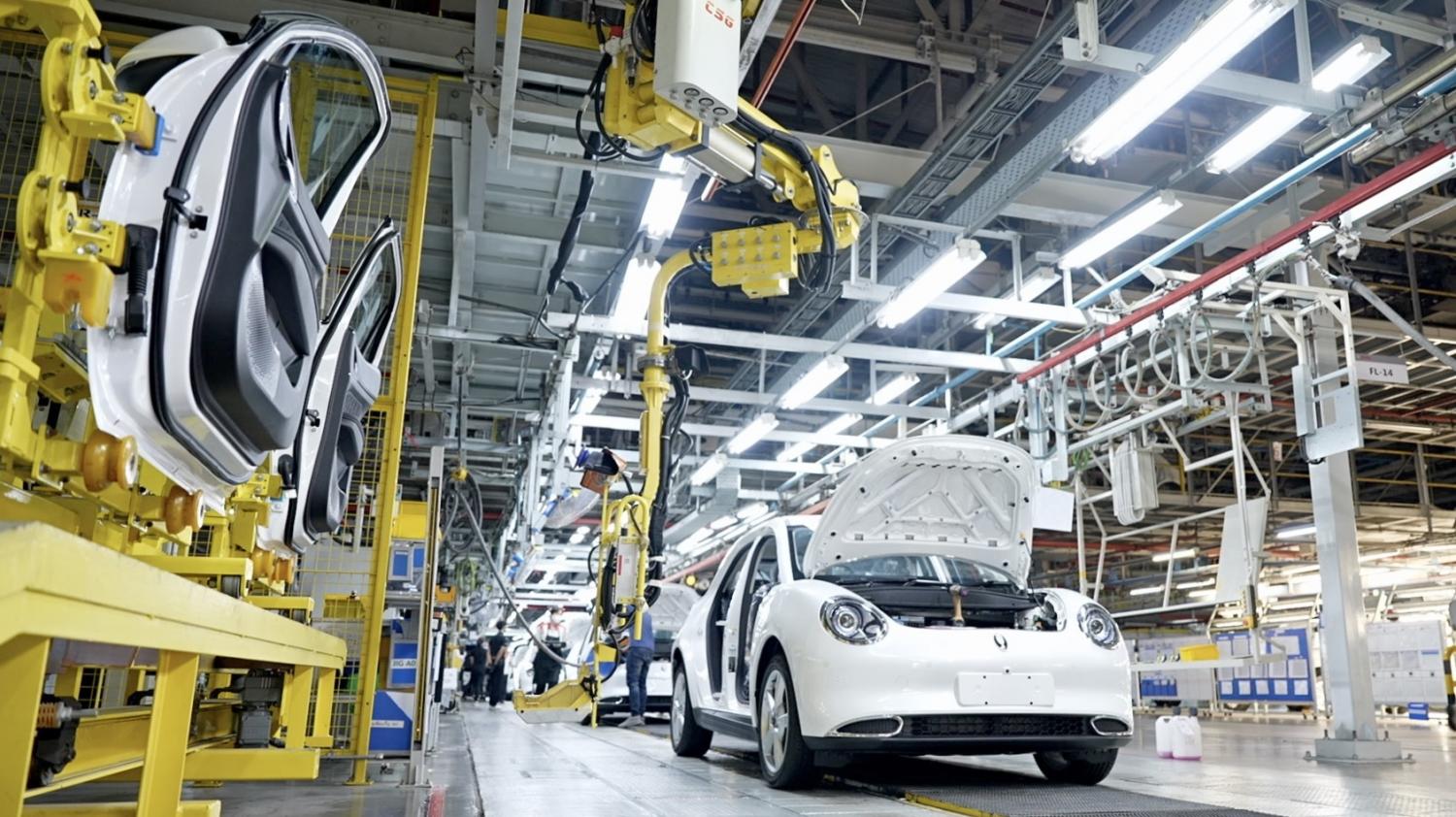
Thailand’s Manufacturing Production Index (MPI) saw a year-on-year decline of 3.5% in September, falling to 92.4 points. This dip reflects ongoing challenges in key sectors like automotive and construction, and experts predict continued strain as the global economic landscape remains uncertain.
Factors Contributing to the MPI Decline
Automotive Sector Challenges: Decrease in Car Production
One significant factor impacting the MPI is the ongoing decline in car manufacturing, with production dropping by 23.4% in September. This includes a downturn in pickups, small passenger vehicles, and hybrid electric vehicles with engine sizes over 1,800 cc. Financial institutions’ stricter lending criteria due to rising concerns over non-performing auto loans have further strained this sector, marking the 14th consecutive month of declining production.
Construction Sector Struggles with Declining Project Demand
The construction sector also experienced a drop, with production in concrete, cement, and plaster down by 8.9% year-on-year. This slowdown reflects a decrease in both public and private construction projects, compounded by high household debt levels and increasing costs of construction materials and residential buildings.
MPI Trends and Capacity Utilisation in the Third Quarter
Quarterly MPI Performance and Capacity Utilisation
In the third quarter, the MPI dropped by 1.2% year-on-year to 94.7 points. Capacity utilisation across industries was recorded at 58.2%, indicating a potential underuse of manufacturing capabilities. Passakorn Chairat, acting director-general of the Office of Industrial Economics (OIE), emphasized that weakened consumer purchasing power and high household debt levels are significant contributors to the declining MPI.
Positive Growth in Canned Food Production
Surge in Canned Aquatic Animal Products
While automotive and construction face headwinds, canned food production from aquatic animals saw a 49.9% year-on-year increase in September. The OIE attributes this growth to a surge in international orders from countries like the US, Canada, and Australia, primarily in preparation for year-end festivities.
Future Challenges and Global Economic Uncertainty
Impact of the US Presidential Election and Economic Policies
The upcoming US presidential election on November 5 adds a layer of uncertainty for Thai manufacturers. With Republican candidate and former president Donald Trump facing Democratic candidate and Vice President Kamala Harris, the election outcome could influence Thailand’s exports and manufacturing sectors.
Passakorn advised businesses to adapt and focus on efficient resource management. “There will be companies affected or benefiting from the new US administration. Manufacturers should adapt and better manage their resources.”
A Call for Sustainability in Manufacturing
OIE Encourages Shift to Clean Energy
In response to growing global sustainability efforts, Passakorn encouraged Thai factories to adopt clean energy solutions. This shift aligns with international goals to reduce carbon dioxide emissions and may offer Thai manufacturers a competitive advantage in an increasingly eco-conscious market.
As Thailand’s MPI continues to feel the effects of sector-specific downturns and broader economic uncertainties, manufacturers are urged to adapt, focus on clean energy, and leverage growth opportunities in high-demand export areas like canned food production.
